Quick answer
The foods with actual trial or cohort evidence behind them are oily fish, leafy greens and other vitamin C sources, whole grains, green tea, and fermented foods.[1][4][5][6] The five worth cutting back are free sugars, refined carbohydrates, acidic soft drinks, sticky dried fruit, and alcohol.[7] Diet works by changing the inflammatory response, not by scrubbing plaque off - which is why it stacks with brushing instead of replacing it.
What's in this guide
The Trial That Made This Worth Writing
Most "foods for healthy gums" lists are guesses dressed up as advice. There is one study that turns the question into something testable.
A team in Freiburg took 30 people with gingivitis and split them into two groups. One group switched for four weeks to a diet low in processed carbohydrates and animal protein and high in omega-3 fatty acids, vitamin C, vitamin D, antioxidants, plant nitrates and fibre. The other group ate exactly as before. Both groups were told to stop interdental cleaning, and a dentist who did not know which group anyone was in scored their gums.[1]
The diet group's gingival bleeding dropped significantly. Their plaque levels did not. That gap is the whole point: the food did not remove more bacteria, it changed how hard the body's inflammatory response came down on the tissue.
The 7 Foods With Real Evidence Behind Them
1. Oily fish (salmon, sardines, mackerel)
Omega-3 fatty acids are the closest thing to a nutritional anti-inflammatory for gum tissue. A meta-analysis of 13 randomized controlled trials found omega-3 intake - dietary or supplemental - produced measurable improvements in pocket depth, clinical attachment level, and bleeding on probing in people being treated for periodontitis.[5]
Two servings a week is the standard target. Sardines are the cheap version and nobody talks about them enough.
2. Leafy greens and bell peppers (vitamin C)
Gum tissue is largely collagen, and your body cannot build collagen without vitamin C. Analysis of NHANES data found people in the lowest quartile of dietary vitamin C intake were more likely to have periodontitis than those in the higher quartiles.[2] An older analysis of NHANES III reached a similar conclusion about intake and periodontal disease risk.[3]
The newer analysis found something more interesting: the relationship was not a straight line. The lowest periodontitis risk sat around 158 mg per day, and very high intakes were associated with more disease, not less.[2] That is an argument for a red pepper, not for a 2,000 mg tablet.
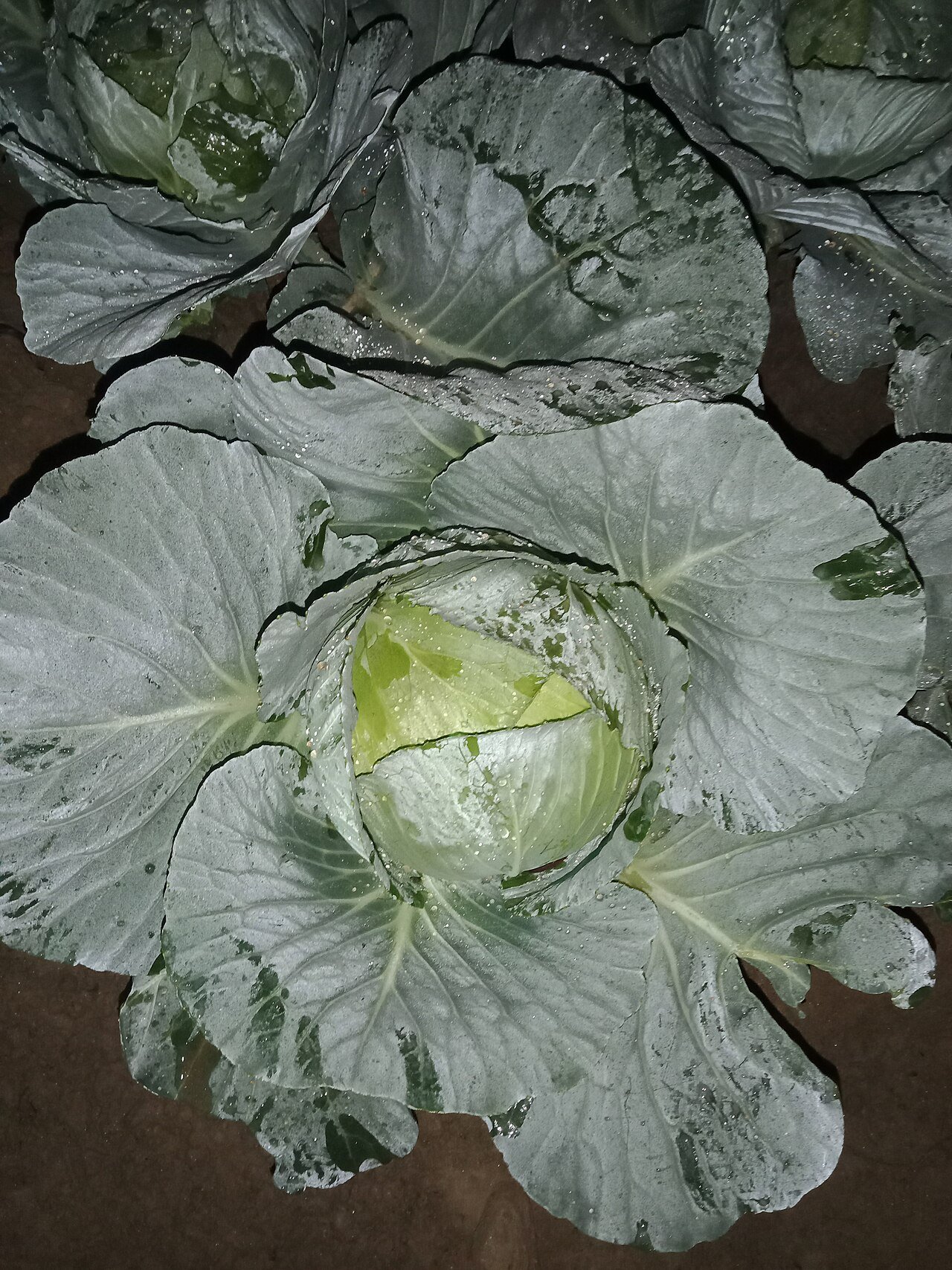
3. Whole grains
A prospective study following 34,160 men found those in the highest quintile of whole-grain intake were 23% less likely to develop periodontitis than those in the lowest, after adjusting for age, smoking, BMI, alcohol, activity and total energy. Refined grains showed no such association.[4]
The proposed mechanism is blood sugar. Better insulin sensitivity means less of the glycemic stress that makes gum tissue an easier target - the same reason uncontrolled diabetes is a major periodontitis risk factor.
4. Green tea
In a randomized trial, 120 people with mild to moderate chronic periodontitis all received scaling and root planing. Half then got green tea supplements, half got placebo. The green tea group showed significantly better improvement across clinical parameters, along with a much higher total antioxidant capacity in the fluid around the gumline.[6]
Note the design: green tea was tested on top of a professional cleaning. It is an adjunct with trial support, not a cleaning you can drink.

5. Plain yogurt and fermented foods
Your mouth hosts hundreds of bacterial species, and which ones dominate matters more than the raw amount of plaque.[8] Fermented foods do not colonize the mouth the way an oral-specific probiotic strain does, but plain unsweetened yogurt, kefir and fermented vegetables are a low-cost, low-risk way to keep more beneficial species in daily circulation.
The word doing the work here is unsweetened. A sweetened fruit yogurt lands on the other list.
6. Crunchy raw vegetables
Celery, carrots, cucumber. The benefit is mechanical and salivary: chewing fibrous raw vegetables increases saliva flow, and saliva is your mouth's built-in buffer against acid and bacterial overgrowth. High-fibre intake was one of the components of the diet in the gingivitis trial.[1]
7. Nuts and seeds
Almonds and walnuts contribute plant protein, magnesium and, in the case of walnuts, plant-source omega-3. They also make a good default replacement for the snack that would otherwise be crackers - which is half of why they show up on this list at all.
The 5 Foods Quietly Wrecking Your Gums
Quietly, because none of these announce themselves. You do not feel your gums react to a soda the way you feel a hot drink on a sensitive tooth.
Cut back
- Free sugars - a systematic review of 13 studies found 11 reported a significant link between frequent free-sugar intake and higher periodontal disease prevalence or incidence.[7]
- Refined carbohydrates - white bread, crackers, chips. They break down to sugar fast and stick to teeth longer than sugar does.
- Acidic soft drinks - including diet and sparkling. The acid load stresses tissue and enamel independently of the sugar.
- Sticky dried fruit - concentrated sugar with a texture engineered to sit in the gaps between teeth.
- Alcohol - reduces saliva flow, and dry mouth is one of the fastest routes to bacterial overgrowth at the gumline.
Frequency matters more than amount
- One dessert with dinner is a single acid exposure.
- The same dessert grazed over three hours is many.
- Sipping a sweet drink all afternoon is the worst pattern on this page.
- If you are going to have it, have it and be done.
- Rinse with plain water afterwards; wait 30 minutes before brushing after anything acidic.
The sugar evidence deserves an honest caveat. Twelve of the thirteen studies in that review were cross-sectional, so the authors themselves describe the evidence as limited.[7] The direction is consistent across nearly every study; the strength of proof is not what it would be with trials.
Quick Reference: Swap This for That
| Instead of | Try | Why it matters for gums |
|---|---|---|
| Fruit-flavored yogurt | Plain yogurt + fresh berries | Same fermented base, without the added free sugars[7] |
| White toast | Whole-grain bread | 23% lower periodontitis risk in the top whole-grain quintile[4] |
| Afternoon soda | Unsweetened green tea | Removes an acid/sugar exposure, adds studied polyphenols[6] |
| Orange juice | A whole orange or red pepper | Vitamin C with fibre, without the liquid sugar load[2] |
| Chicken most nights | Oily fish twice a week | Omega-3 improved bleeding on probing in RCT meta-analysis[5] |
| Crackers as a snack | Nuts or raw vegetables | Less refined starch clinging to the gumline, more saliva |
| Dried mango, raisins | Fresh fruit | Same sugar, far less contact time on the teeth |
Why Food Alone Only Does Half the Job
Look again at what the gingivitis trial actually measured. Bleeding went down. Plaque did not. The subgingival microbiome composition did not shift measurably in four weeks either.[1]
That result draws a clean line. Diet is powerful at the inflammation end - how strongly your tissue reacts to what is already there. It is much weaker at the ecosystem end - which species are living at your gumline in the first place.[8] Those are two different problems, and eating more salmon only solves one of them. The full mechanism is laid out in the pillar guide: Oral Microbiome 101.
The bacterial side is where an oral probiotic is actually aimed - specific strains delivered to the mouth rather than the gut. We went through the research strain by strain, including where it is thin, in a separate piece.
Do oral probiotics actually work? →If you want the longer version of how I put the food side and the bacterial side together into one daily routine - and what changed once I stopped treating them as the same problem - that's the story on the home page.
A Realistic Week One
Rewriting an entire diet on a Monday is how people quit by Thursday. Three changes is enough to test the idea.
- Pick one sugar exposure to delete. Not all of them. The one you have most often - usually a sweetened drink or an evening snack.
- Add oily fish twice. Tinned sardines on toast counts. This is the change with the strongest trial support behind it.[5]
- Put one vitamin C source in daily. Bell pepper, kiwi, broccoli, orange. Food, not a megadose tablet - the NHANES curve turned back up at high intakes.[2]
Keep brushing and flossing exactly as you do now. The trial participants stopped interdental cleaning because the researchers needed to isolate diet as a variable; you have no reason to reproduce that part.
How to know if it's working
Check the same two teeth every Sunday. Floss between them and look at the floss. Less pink after four to six weeks means the inflammation is responding. No change at all after six consistent weeks means the driver is mechanical or structural - tartar below the gumline, a bad crown margin, a grinding habit - and a hygienist will do more in one visit than a year of grocery decisions.
What Diet Cannot Fix
Food does not remove tartar. Once plaque mineralizes at or below the gumline, no nutrient dissolves it - it comes off with an instrument.
Food also does not rebuild bone. If the inflammation has already crossed into periodontitis, diet may slow the progression, but the lost attachment does not return because you started eating leafy greens. Which stage you are in is the single most useful thing to know, and it is covered in gingivitis vs periodontitis.
Book an appointment rather than adjusting your diet if you have loose teeth, visible recession, pus at the gumline, or bleeding that has been going for months. Those are findings, not eating habits. If bleeding is your main symptom and you want the full list of causes, start with why do my gums bleed when I brush.
Frequently asked questions
Can changing my diet really reduce bleeding gums?
In a randomized controlled trial, 30 people with gingivitis were split into two groups. The group that switched to a diet low in processed carbohydrates and animal protein and rich in omega-3s, vitamin C, vitamin D, antioxidants, plant nitrates and fibre saw a significant drop in gingival bleeding over four weeks - even though both groups stopped interdental cleaning and plaque levels did not differ. Diet changed the inflammatory response, not the amount of plaque.
Which vitamin is most important for gum health?
Vitamin C has the most direct evidence. It's required to build the collagen gum tissue is made of, and population data links low dietary intake to higher periodontal disease risk. One NHANES analysis found the relationship is non-linear - both very low and very high intakes were associated with more periodontitis, with the lowest risk around 158 mg per day. Food sources beat megadose supplements.
Is sugar actually bad for gums, or just for cavities?
Both. A 2022 systematic review of 13 studies found 11 of them reported a significant association between frequent intake of free-sugar-containing foods or drinks and higher prevalence or incidence of periodontal disease. The authors note the evidence is limited because most studies were cross-sectional, so it shows a consistent link rather than proof of cause.
Does green tea help gums?
There's trial evidence for green tea as an add-on, not a replacement. In a randomized controlled trial of 120 people with mild to moderate chronic periodontitis, everyone received scaling and root planing, and the group given green tea supplements showed significantly better improvement in clinical parameters plus a markedly higher antioxidant capacity in gingival crevicular fluid than the placebo group.
How long before a diet change shows up in my gums?
The gingivitis diet trial ran for four weeks and measured a clinically relevant reduction in bleeding in that window. Four to six weeks is a reasonable checkpoint. If bleeding hasn't improved at all after six consistent weeks, the problem is likely mechanical or structural and needs a dentist, not a grocery list.
References
- Woelber JP, Gärtner M, Breuninger L, et al. The influence of an anti-inflammatory diet on gingivitis. A randomized controlled trial. Journal of Clinical Periodontology, 2019; 46(4):481-490. PubMed 30941800
- Li W, Song J, Chen Z. The association between dietary vitamin C intake and periodontitis: result from the NHANES (2009-2014). BMC Oral Health, 2022; 22(1):390. PubMed 36076176
- Nishida M, Grossi SG, Dunford RG, Ho AW, Trevisan M, Genco RJ. Dietary vitamin C and the risk for periodontal disease. Journal of Periodontology, 2000; 71(8):1215-23. PubMed 10972636
- Merchant AT, Pitiphat W, Franz M, Joshipura KJ. Whole-grain and fiber intakes and periodontitis risk in men. American Journal of Clinical Nutrition, 2006; 83(6):1395-400. PubMed 16762952
- Heo H, Bae JH, Amano A, Park T, Choi YH. Supplemental or dietary intake of omega-3 fatty acids for the treatment of periodontitis: A meta-analysis. Journal of Clinical Periodontology, 2022; 49(4):362-377. PubMed 35141945
- Chopra A, Thomas BS, Sivaraman K, Prasad HK, Kamath SU. Green tea intake as an adjunct to mechanical periodontal therapy for the management of mild to moderate chronic periodontitis: a randomized controlled clinical trial. Oral Health & Preventive Dentistry, 2016; 14(4):293-303. PubMed 27175448
- Kusama T, Nakazawa N, Takeuchi K, Kiuchi S, Osaka K. Free sugar intake and periodontal diseases: a systematic review. Nutrients, 2022; 14(21):4444. PubMed 36364708
- Dewhirst FE, Chen T, Izard J, Paster BJ, Tanner AC, Yu WH, Lakshmanan A, Wade WG. The human oral microbiome. Journal of Bacteriology, 2010; 192(19):5002-17. PubMed 20656903
Citations are provided for context on nutrition and periodontal health in general - they are not endorsements of any specific commercial product.