Quick answer
Gingivitis is inflammation of the gum tissue only - no bone loss, fully reversible.[1] Periodontitis means the infection has destroyed some of the bone and ligament anchoring the tooth - not reversible, only manageable.[2] The line between them is measured in millimeters with a probe, not guessed by how your mouth feels.
What's in this guide
What Actually Separates Gingivitis From Periodontitis?
Both start the same way: plaque builds up along the gumline, bacteria trigger an immune response, and the gum tissue becomes inflamed. At this point, it's gingivitis - inflammation limited to the soft tissue, with the bone and ligament underneath still completely intact.[1]
Periodontitis is what happens when that inflammation is left unaddressed long enough that it spreads below the gumline and starts breaking down the periodontal ligament and the alveolar bone that hold the tooth in its socket.[2] That structural loss is the whole difference. Gum tissue heals. Bone that has been resorbed by chronic infection does not grow back on its own.
Every mouth that has periodontitis went through gingivitis first. Not every mouth with gingivitis develops periodontitis - some people's immune response and risk profile keep the inflammation contained indefinitely. But you cannot skip the gingivitis stage on the way to periodontitis.
The Visible Signs of Each Stage
You can pick up on a lot before you ever sit in a dental chair. Here's what separates the two in the mirror:
| Sign | Gingivitis | Periodontitis |
|---|---|---|
| Gum color | Red or dusky pink, puffy | Red or purplish, may look "pulled back" |
| Bleeding | When brushing or flossing | Brushing, flossing, sometimes spontaneously |
| Bad breath | Mild, comes and goes | Persistent, often stronger |
| Tooth mobility | None | Can occur in advanced cases |
| Gum recession or pockets | None | Present - visible gaps or "longer" teeth |
| Pus at the gumline | Never | Possible in active infection |
| Bone loss on X-ray | None | Present, degree varies by stage |
If your gums bleed but your teeth feel exactly as solid as always and nothing looks "sunken," that's a strong gingivitis pattern. For a deeper walkthrough of the bleeding symptom on its own, see why do my gums bleed when I brush.
Why Gingivitis Is Reversible and Periodontitis Isn't
Gum tissue is soft tissue. Like skin, it can regenerate once the source of irritation - plaque and the bacterial byproducts around it - is removed. Clean the area consistently for a couple of weeks and the inflammation resolves, gums go back to firm and pink, bleeding stops.[1]
Bone is different. Alveolar bone that has been resorbed by chronic inflammatory activity does not regenerate the way gum tissue does. The body does not have a default repair pathway that rebuilds lost bone around a tooth root. Once that support is gone, periodontal treatment is aimed at stopping further loss and stabilizing what remains - not restoring what's already gone.[2]
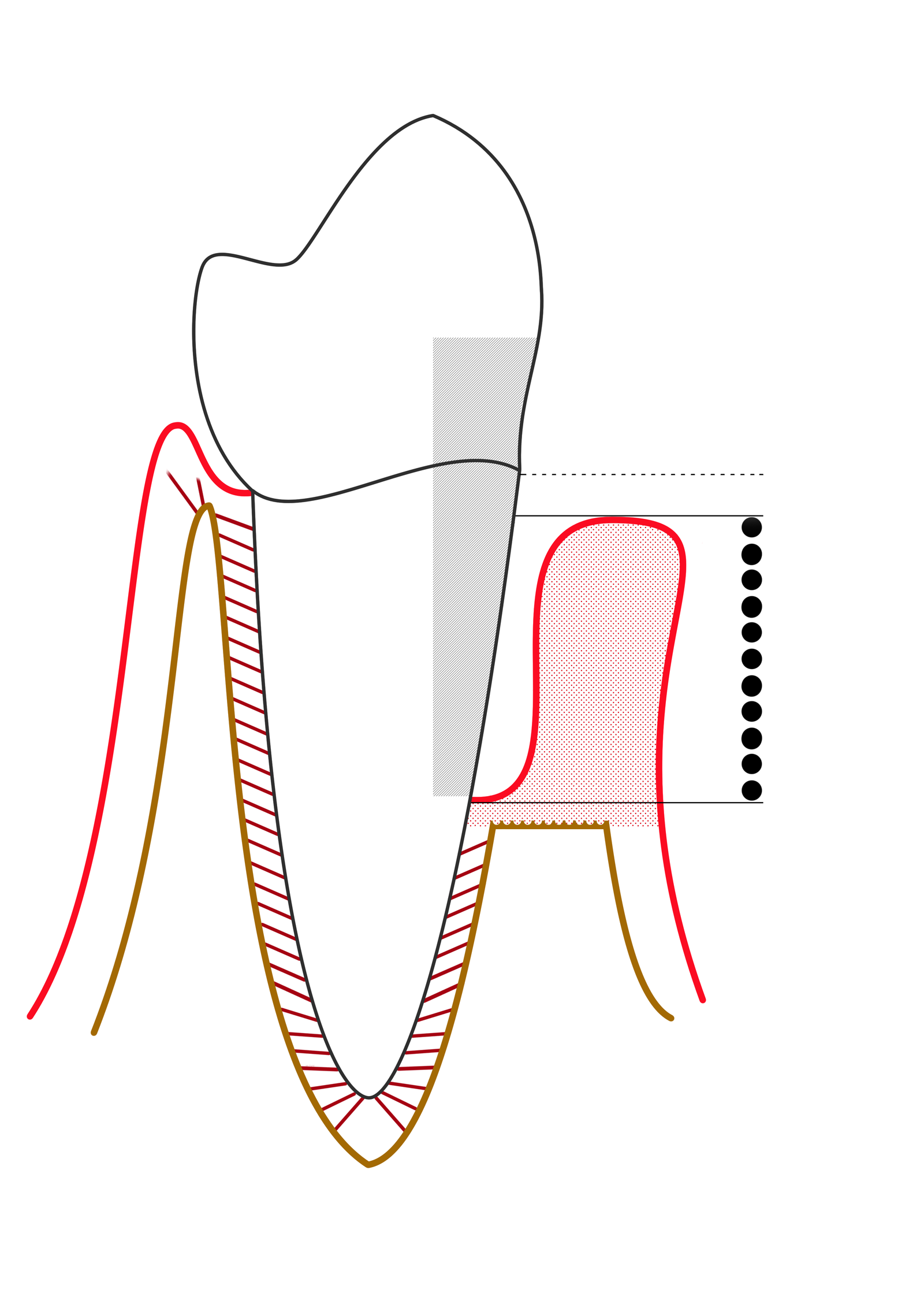
What a Dentist Actually Checks to Tell Them Apart
The tool that settles the question is a periodontal probe - a thin, blunt-tipped instrument marked in millimeters. The hygienist walks it gently around each tooth and calls out numbers.
- 1 to 3mm, bleeds on probing, no bone loss on X-ray: gingivitis.
- 4 to 5mm with some bone loss: early to moderate periodontitis.
- 6mm or deeper with clear bone loss: advanced periodontitis, tooth support is meaningfully compromised.
This is why "my gums don't hurt" is not reassuring on its own. Periodontitis is frequently painless until it's advanced, because the bone loss itself doesn't have nerve endings the way a cavity does. The probe measurement and the X-ray are what catch it, not how it feels day to day.
What Pushes Gingivitis Into Periodontitis?
Plaque left in place long enough is the trigger, but it's not the whole story - two people with identical brushing habits can have very different outcomes because of these factors:
Raises the risk
- Smoking or vaping (reduces blood flow, masks bleeding, slows healing)
- Uncontrolled diabetes
- Genetics and family history of gum disease
- Hormonal shifts (pregnancy, menopause)
- Certain medications that reduce saliva flow
- Chronic stress and poor sleep
Lowers the risk
- Twice-daily brushing with proper technique
- Daily flossing or interdental cleaning
- Professional cleaning every 6 months
- Not smoking
- Managing blood sugar if diabetic
- A balanced oral microbiome rather than one dominated by inflammatory species
Where Does the Oral Microbiome Fit In?
Plaque is not a random film - it's a living community of hundreds of bacterial species.[3] In a balanced mouth, that community stays mostly harmless. When it tips toward inflammatory, disease-associated species, the same amount of "plaque" becomes a much bigger problem. That shift is the mechanism behind both gingivitis and its progression to periodontitis - not just "not brushing enough." For the full picture of how that ecosystem works, see the pillar guide: Oral Microbiome 101.
This is also where an oral probiotic can realistically help - not as a cure for periodontitis, but as an adjunct that supports a healthier bacterial balance while you're still in the reversible gingivitis window. We cover the actual research behind that claim, strain by strain, in a separate piece.
Do oral probiotics actually work? →If you're rebuilding your daily routine from the ground up - not just picking one product - the fuller story of what helped restore the balance in my own mouth is on the home page.
When to Stop Reading and Book an Appointment
Some signs mean this article has done its job and it's time for a professional exam, not more self-diagnosis:
- Any tooth that feels loose or has shifted position
- Gums that look like they've pulled away, exposing more root than before
- Pus or a bad taste that keeps returning at the same spot
- Bleeding that doesn't improve after two weeks of consistent brushing and flossing
- Persistent bad breath despite good hygiene - see bad breath that won't go away for the fuller workup
Frequently asked questions
What is the main difference between gingivitis and periodontitis?
Gingivitis is inflammation confined to the gum tissue, with no bone or attachment loss - fully reversible with better hygiene. Periodontitis means the infection has spread below the gumline and destroyed bone and ligament, which is not reversible; treatment can only stop it from getting worse.
Can gingivitis turn into periodontitis?
Yes, if plaque and tartar are left long enough at and below the gumline. Not everyone progresses - host response and risk factors like smoking and diabetes matter - but gingivitis is the necessary first stage before periodontitis can develop.
How does a dentist tell them apart?
With a periodontal probe measuring pocket depth in millimeters. Depths of 1 to 3mm with bleeding but no bone loss on X-ray point to gingivitis. Depths of 4mm or more with visible bone loss indicate periodontitis.
Can you reverse gum disease naturally?
Gingivitis, yes - consistent brushing, flossing, and a professional cleaning can return gums to healthy within a few weeks. Periodontitis cannot be reversed naturally because lost bone and ligament don't regrow on their own; a dentist can only stop further damage.
What are the earliest warning signs I should not ignore?
Gums that bleed when you brush or floss, gums that look red or puffy instead of firm and pink, and breath that stays bad even after brushing. Catching it at this stage is the difference between a two-week fix and a lifelong condition.
References
- Daley JO, Jain P. Gingivitis. StatPearls [Internet], 2026. PubMed 32491354
- Gasner NS, Schure RS. Periodontal Disease. StatPearls [Internet], 2026. PubMed 32119477
- Dewhirst FE, Chen T, Izard J, Paster BJ, Tanner AC, Yu WH, Lakshmanan A, Wade WG. The human oral microbiome. Journal of Bacteriology, 2010; 192(19):5002-17. PubMed 20656903
Citations are provided for context on gum disease staging and the oral microbiome in general - they are not endorsements of any specific commercial product.