Quick answer
Morning breath is normal, and it has a specific cause: salivary flow is negligible during sleep, so the mouth stops washing itself for eight hours.[2] Anaerobic bacteria on the tongue spend that time converting sulfur-containing amino acids into volatile sulfur compounds, and nothing clears them. The bacteria doing it are concentrated at the back of the tongue – roughly sixty times the load at the tip – in a zone the authors of that study described as not accessible to routine oral hygiene.[5] Which is why cleaning the front of your tongue and rinsing changes so little. The real test is simple: if it survives breakfast and brushing, it isn't morning breath.
What's in this guide
- Morning Breath Isn't Halitosis
- The Eight Hours Your Mouth Stops Rinsing
- You're Cleaning the Wrong End of Your Tongue
- Why Yours Might Be Worse Than Everyone Else's
- The Test That Tells You Which Problem You Have
- What the Trials Say Actually Works
- The Night Before Matters More Than the Morning After
- When It Isn't Coming From Your Mouth
- FAQ
- References
Morning Breath Isn't Halitosis
Start with the distinction that decides everything else on this page, because most articles blur it and send people down the wrong road.
Morning breath is a physiological state. It arrives overnight, it happens to essentially everyone, and it clears once saliva comes back, you eat something and you clean your mouth. Chronic halitosis is breath odour that is still there at eleven in the morning after all three of those things have happened.
Same smell, same molecules, completely different problem. One is a plumbing pause. The other is a resident population that has found a permanent home.
If you already know yours outlives breakfast, you can skip most of this and go straight to the chronic bad breath guide. If you are not sure, section five gives you a way to find out in a morning.
The molecules, briefly
The smell is mostly volatile sulfur compounds – principally hydrogen sulfide and methyl mercaptan – produced when anaerobic bacteria break down sulfur-containing amino acids from food debris, dead cells and proteins in saliva.[4] Your mouth hosts several hundred bacterial species in a structured community,[1] and this is one of the things a subset of them do for a living. It is metabolism, not dirt.
The Eight Hours Your Mouth Stops Rinsing
Saliva is doing more work than it gets credit for. It dilutes, it buffers, it clears sugar and acid, it carries antibacterial and antifungal factors, and it keeps a thin film moving across every surface in your mouth.[2]
Then you fall asleep and it more or less stops.
The line from the literature is unusually blunt for a review paper: the most important time for toothbrushing is just before bedtime, because salivary flow is negligible during sleep and the protective effects of saliva are lost.[2] This is not a small dip either – unstimulated whole saliva has a genuine circadian rhythm in flow rate, measured and modelled decades ago with cosinor analysis across subjects sampled repeatedly through the day.[3]
So picture the overnight conditions from a bacterium's point of view. No flow. No dilution. No mechanical clearance. Reduced oxygen in the deeper layers of the tongue coating. A steady supply of protein substrate. Eight uninterrupted hours.
Morning breath is the receipt.
You're Cleaning the Wrong End of Your Tongue
This is the section I would keep if I had to delete the rest.
Tongue coating is considered the most important source of volatile sulfur compounds in the mouth.[4][6] That much is fairly well known. What is much less known is where on the tongue.
A study sampled six separate tongue surfaces in 50 people with good oral health and at least 20 natural teeth, then cultured each sample for the bacteria that actually produce those compounds. The counts, in colony-forming units per brush ×105, were not remotely evenly spread.
Read the gradient again: 1.45 at the front, 88.94 at the back. The underside of the tongue, which nobody worries about, came in at 0.33.[5]
And the authors' own conclusion is the part worth taping to your mirror: that region consistently carries the highest load of bacteria capable of contributing to malodour, and tongue surfaces not accessible to routine oral hygiene procedures can significantly contribute to oral malodour.[5]
The circumvallate papillae are the row of large bumps arranged in a V near the back of your tongue. They are the landmark. The problem zone starts behind them.
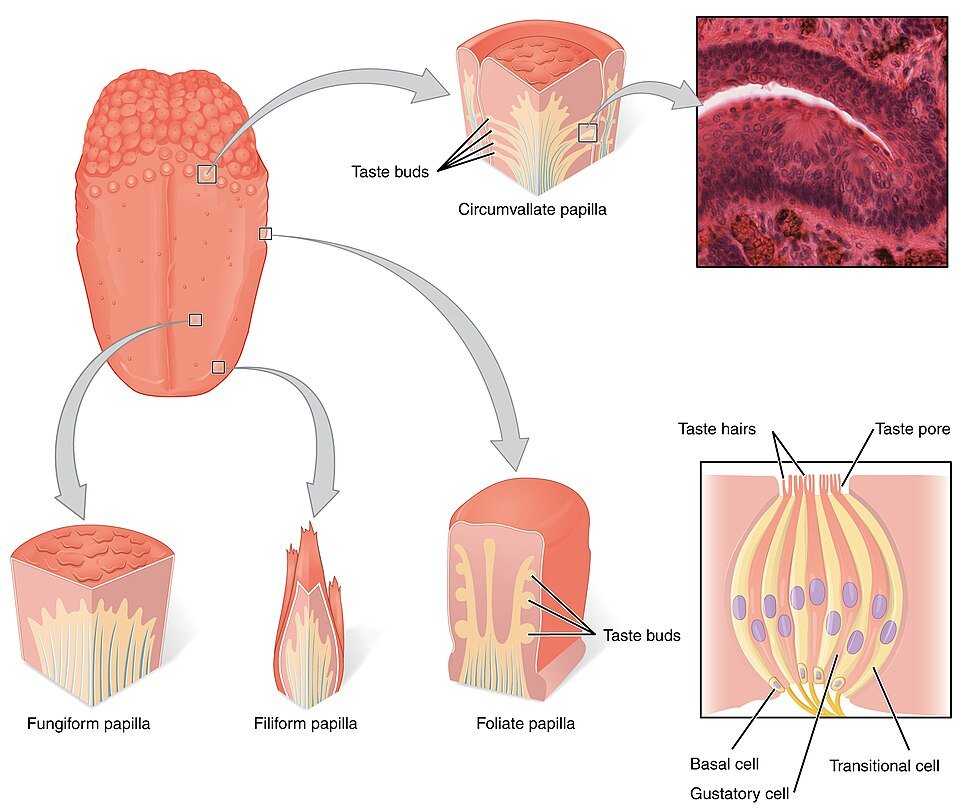
Which explains a frustration a lot of people have. You bought the scraper. You use it. It didn't fix much. The likely reason is that you have been scraping the part of the tongue you can see comfortably in a mirror without gagging – the low-count end.
Why Yours Might Be Worse Than Everyone Else's
Everyone wakes up with some version of this. If yours is noticeably worse, there is usually a reason, and most of them are on this list.
Things that dry the mouth further
- Mouth breathing and snoring. A review of obstructive sleep apnea and oral health found mouth breathing to be a critical factor in worsening xerostomia[12]
- Medication. A World Workshop systematic review identified 56 substances with a higher level of evidence for causing dry mouth or salivary gland dysfunction, across nine of the fourteen main drug groups[11]
- Alcohol in the evening – a diuretic arriving right before the eight-hour dry spell
- Heated or air-conditioned bedrooms
Things that feed the bacteria more
- Skipping the bedtime brush – the single worst omission, for the reason in the section above[2]
- A thick tongue coating, whatever is causing it
- Untreated gum disease – periodontal pockets are a bacterial reservoir alongside the tongue[4]
- A late high-protein snack left sitting in a mouth that has stopped rinsing
Two things worth flagging on that first list. Snoring is not a cosmetic detail here – if you snore heavily, wake with a bone-dry mouth and feel unrested, that combination is worth raising with a doctor for reasons well beyond your breath.[12] And if your dry mouth started when a prescription did, that is a conversation with the prescriber, not a reason to buy a stronger mouthwash.
The Test That Tells You Which Problem You Have
You do not need a device for this. You need one ordinary morning and a bit of honesty.
The survival test
- Wake up. Note that it is there. That's baseline – and it's normal.
- Clean your tongue first, going further back than usual, then brush and floss.
- Eat breakfast and drink something. Chewing is the point, not the food.
- Wait until roughly 11 a.m. – no mints, no gum, no rinse in between.
- Check then. Lick the back of your wrist, let it dry for ten seconds, and smell it, or ask someone who will tell you the truth.
Gone by 11 a.m. → ordinary morning breath. The rest of this article is your playbook.
Still there at 11 a.m. → that's chronic halitosis, a different problem with a different fix.
That timing is not arbitrary. It is drawn from the diurnal measurements: volatile sulfur compounds in mouth air stayed high through the morning and fell after lunch in the general group – but in the subset with persistent malodour, the usual measures had only limited effect.[7] The morning is precisely the window where the two conditions look different.
If you came out on the "still there at 11" side, stop here and read how to get rid of bad breath that won't go away instead – it covers the reservoirs, why mouthwash masks rather than fixes, and when the cause is gum disease.
What the Trials Say Actually Works
For ordinary morning breath the evidence is decent, unglamorous, and mostly about mechanics rather than products.
| What | Evidence | What it actually does |
|---|---|---|
| Tongue cleaning, then brushing | Strong | Decreased VSCs dramatically in the diurnal study;[7] a systematic review found a positive effect on malodour and coating in every included experiment[8] |
| Eating breakfast | Strong | Significantly reduced VSCs[7] – chewing restarts the salivary flow that stopped overnight[2] |
| Brushing before bed | Strong | The most important brushing of the day, precisely because saliva won't be helping for the next eight hours[2] |
| Zinc-containing rinse or gel | Moderate | Zinc chloride mouthwash significantly reduced VSCs;[7] a 3-week trial of a zinc lactate regimen showed a real overnight effect, though its primary organoleptic outcome wasn't maintained at day 21[9] |
| Drinking tea or water on waking | Moderate | Tea significantly reduced VSCs in the same study[7] |
| Chewing sugar-free gum | Moderate | Stimulates salivary flow, which is the mechanism the whole problem runs on[2] |
| Mints and breath sprays | Cosmetic | Cover the smell for minutes without touching the bacterial source |
| Probiotics without cleaning first | Failed its test | K12 tablets taken for 30 days with no tongue cleaning beforehand showed no significant difference versus placebo[14] |
The honest headline from that table is that the two most effective things on it are free, and one of them is eating breakfast.
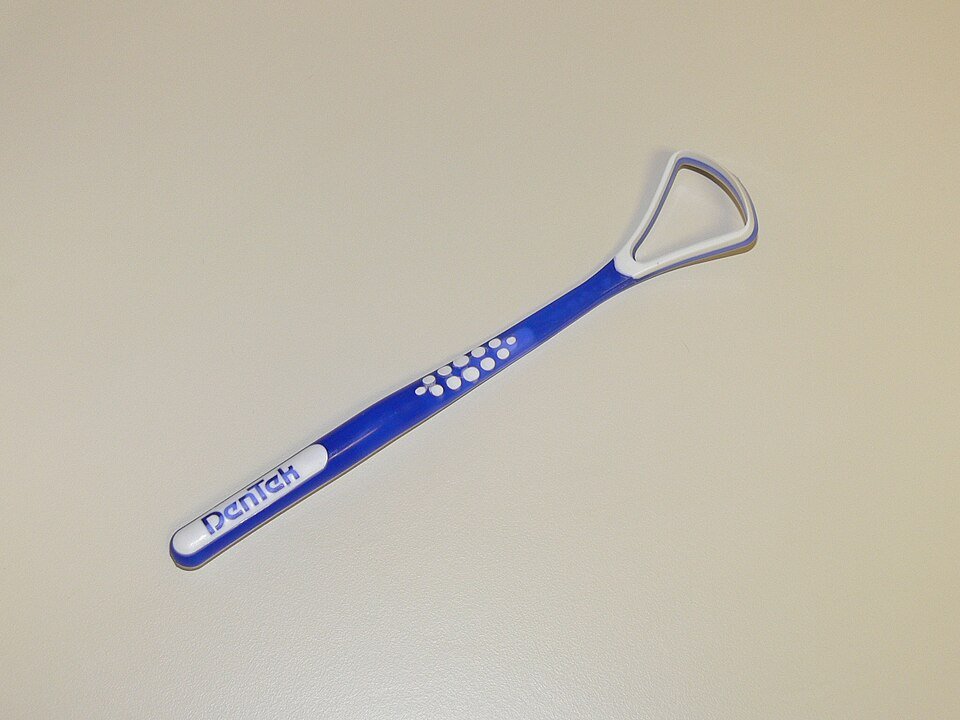
How to actually use a scraper
- Go back further than is comfortable, in stages over a week or two. The gradient in the diagram is the entire reason.[5]
- Light pressure, several passes, rinsing the scraper between them. You are lifting a coating, not sanding a surface.
- Scrape first, brush second. That's the order used in the study where VSCs dropped dramatically.[7]
- Exhale while you scrape. It genuinely reduces the gag reflex and lets you reach further.
- If it bleeds, you are pressing far too hard. Back off.
The Night Before Matters More Than the Morning After
Almost all the advice on this topic is aimed at 7 a.m. The mechanism says the leverage is at 11 p.m.
Everything you leave in your mouth at bedtime gets eight undisturbed hours with no saliva to clear it.[2] Everything you remove is eight hours of substrate the bacteria never get.
There is a nice piece of evidence for how much the mechanical side is carrying. Thirteen periodontally healthy volunteers stopped brushing for five days while continuing to floss and scrape their tongues twice a day. Plaque rose immediately, but morning VSCs and organoleptic scores held steady through day three – and only became significantly worse by day five.[10]
Two lessons in one small study. The tongue is the main event, which is why scraping and flossing held the line for a while. And the teeth still matter, which is why the line eventually broke.
A bedtime routine built around the biology
- Scrape the tongue, back to front, reaching as far back as you can manage.
- Clean between the teeth. Interdental biofilm is a reservoir a brush cannot reach.[4]
- Brush last, and treat it as the important one.[2]
- Water by the bed rather than a nightcap.
- If you wake with a desert-dry mouth every day, look at whether you are breathing through your mouth all night.[12]
If the coating keeps coming back thicker than it should, the question stops being how you clean and starts being what is recolonising overnight. That's the ecosystem side of this – and it's where the evidence gets more interesting, and more limited, than the marketing suggests.
Read the ProDentim review →One caution on that, carried over from the trial in the table. When 28 people with tongue-coating-associated halitosis took Streptococcus salivarius K12 for 30 days without removing the coating first, scores improved against their own baseline but showed no significant difference against placebo – and the authors' conclusion was that removing the coating is required before K12 use.[14] Sequence first, supplement second. Never the reverse.
When It Isn't Coming From Your Mouth
A small share of breath odour is not made in the mouth at all, and no amount of scraping will touch it.
Halitosis divides into intra-oral and extra-oral by where it originates. The overwhelming majority is intra-oral – tongue dorsum, saliva, periodontal pockets. Extra-oral halitosis accounts for roughly 5–10% of all cases, most of it blood-borne, frequently involving dimethyl sulfide rather than the usual two compounds.[4]
That review makes the practical point directly: extra-oral halitosis might be a manifestation of a serious disease for which treatment is far more complicated, so distinguishing it from the intra-oral kind matters.[4]
See a professional rather than buying another rinse if:
- The odour is unchanged by cleaning, eating and time – every single day
- Someone describes it as sweet, fishy, or like ammonia rather than the usual sulfur note
- It arrived suddenly alongside other symptoms – weight change, thirst, fatigue, digestive trouble
- Your gums bleed, feel loose, or hurt (start with gingivitis vs periodontitis)
- You have persistent nasal or sinus symptoms – the upper respiratory tract is a recognised extra-oral source[4]
For everyone else – which is most people reading this – morning breath is not a health problem. It is the predictable result of eight hours without saliva, produced by bacteria doing what they do, in a part of your mouth you have probably never cleaned. Address those three facts and it stops being interesting. The longer version of how I stopped fighting my mouth and started working with it is on the home page.
Frequently asked questions
Why does everyone have bad breath in the morning?
Because saliva is the mouth's rinse cycle and it effectively switches off overnight. Salivary flow is negligible during sleep – which is why the most important brushing of the day is the one just before bed, since saliva's protective effects are lost for the eight hours that follow. Without that flow, anaerobic bacteria on the tongue break sulfur-containing amino acids down into volatile sulfur compounds, mainly hydrogen sulfide and methyl mercaptan, and nothing washes them away. Measured with a gas chromatograph, those compounds stay high right through the morning and fall after lunch.
Is morning breath the same as halitosis?
No, and the difference is practical. Morning breath is a normal physiological state that resolves once saliva returns, you eat and you clean your mouth. Chronic halitosis survives all three. The self-test is whether yours outlives breakfast and brushing by mid-morning. In the diurnal study of dental-office workers, breakfast, tea, tongue cleaning followed by brushing, and a zinc chloride mouthwash all significantly reduced volatile sulfur compounds – but the effect was limited in the people with persistent malodour. If the usual measures don't work on you, that's the signal you're dealing with the chronic problem.
Which part of the tongue causes bad breath?
The back, and not by a small margin. When researchers sampled six tongue surfaces in 50 people with good oral health, counts of VSC-producing bacteria were 1.45 at the front, 5.67 in the middle, 32.52 on the posterior dorsum and 88.94 just behind the circumvallate papillae, in colony-forming units per brush ×105. That's roughly sixty times more at the back than at the tip. The authors concluded that this area consistently carries the highest load, and that tongue surfaces not reachable by routine oral hygiene contribute significantly to malodour – which is exactly the zone most people never touch.
Does brushing your tongue actually help morning breath?
Yes, with the caveat that it works better for ordinary morning breath than for chronic halitosis. A systematic review found that mechanical tongue cleaning, by scraper or brush, in addition to toothbrushing had a positive effect on measures of oral malodour and tongue coating in every included experiment – while noting explicitly that data on chronic halitosis are insufficient. In the diurnal workplace study, tongue cleaning followed by toothbrushing decreased VSCs dramatically. Scrape gently, and go further back than feels natural.
Why is my morning breath worse than other people's?
Usually because something is drying your mouth further or feeding the bacteria more. Mouth breathing is the common one – a review of obstructive sleep apnea and oral health found mouth breathing to be a critical factor in worsening xerostomia. Medication is the other big driver: a World Workshop systematic review identified 56 chemical substances with a higher level of evidence for causing salivary gland dysfunction or dry mouth, spanning nine of the fourteen main drug groups. Alcohol before bed, skipping the bedtime brush and untreated gum disease all add to it.
Can I tell if my own breath smells bad?
Partly, and better than the folklore suggests. In 252 patients complaining of oral malodour, self-estimated scores correlated significantly with the examiner's organoleptic assessment (r = 0.61), and the authors concluded self-estimation can be used to judge your own malodour. But only 47.1% matched the examiner exactly, and 38.5% were diagnosed with pseudo-halitosis – worried about a smell that wasn't measurably there. Both halves matter: your impression is worth something, and a lot of people who are anxious about their breath don't have a clinical problem.
Do oral probiotics fix morning breath?
Not on their own, and the sequence appears to matter. In a double-blind placebo-controlled trial, 28 people with tongue-coating-associated halitosis took Streptococcus salivarius K12 tablets for 30 days with no tongue scraping or antiseptic rinse beforehand. Scores improved from their own baseline, but there were no statistically significant differences between the probiotic and placebo groups, and the authors concluded that removing the tongue coating is required before K12 use. Clear the substrate first; influence what recolonises second.
References
- Dewhirst FE, Chen T, Izard J, Paster BJ, Tanner AC, Yu WH, Lakshmanan A, Wade WG. The human oral microbiome. Journal of Bacteriology, 2010; 192(19):5002-17. PubMed 20656903
- Dawes C. Salivary flow patterns and the health of hard and soft oral tissues. Journal of the American Dental Association, 2008; 139 Suppl:18S-24S. PubMed 18460676
- Dawes C. Circadian rhythms in human salivary flow rate and composition. Journal of Physiology, 1972; 220(3):529-45. PubMed 5016036
- Tangerman A, Winkel EG. Extra-oral halitosis: an overview. Journal of Breath Research, 2010; 4(1):017003. PubMed 21386205
- Allaker RP, Waite RD, Hickling J, North M, McNab R, Bosma MP, Hughes FJ. Topographic distribution of bacteria associated with oral malodour on the tongue. Archives of Oral Biology, 2008; 53 Suppl 1:S8-S12. PubMed 18460402
- Seerangaiyan K, Juch F, Winkel EG. Tongue coating: its characteristics and role in intra-oral halitosis and general health – a review. Journal of Breath Research, 2018; 12(3):034001. PubMed 29269592
- Fukui Y, Yaegaki K, Murata T, Sato T, Tanaka T, Imai T, Kamoda T, Herai M. Diurnal changes in oral malodour among dental-office workers. International Dental Journal, 2008; 58(3):159-66. PubMed 18630112
- Van der Sleen MI, Slot DE, Van Trijffel E, Winkel EG, Van der Weijden GA. Effectiveness of mechanical tongue cleaning on breath odour and tongue coating: a systematic review. International Journal of Dental Hygiene, 2010; 8(4):258-68. PubMed 20961381
- Van der Sluijs E, Van der Weijden GA, Hennequin-Hoenderdos NL, Slot DE. The effect of a tooth/tongue gel and mouthwash regimen on morning oral malodour: a 3-week single-blind randomized clinical trial. International Journal of Dental Hygiene, 2018; 16(1):92-102. PubMed 28544762
- Matarazzo F, Reino DM, Hayacibara RM, de Faveri M, Fujimaki M. Effect of toothbrushing discontinuation on morning volatile sulfur compounds in periodontally healthy subjects. Oral Health & Preventive Dentistry, 2013; 11(4):309-13. PubMed 24046821
- Wolff A, Joshi RK, Ekström J, Aframian D, Pedersen AM, Proctor G, Narayana N, Villa A, Sia YW, Aliko A, McGowan R, Kerr AR, Jensen SB, Vissink A, Dawes C. A guide to medications inducing salivary gland dysfunction, xerostomia, and subjective sialorrhea: a systematic review sponsored by the World Workshop on Oral Medicine VI. Drugs in R&D, 2017; 17(1):1-28. PubMed 27853957
- Maniaci A, Lavalle S, Anzalone R, Lo Giudice A, Cocuzza S, Parisi FM, Torrisi F, Iannella G, Sireci F, Fadda G, Lentini M, Masiello E, La Via L. Oral health implications of obstructive sleep apnea: a literature review. Biomedicines, 2024; 12(7):1382. PubMed 39061956
- Pham TA. Comparison between self-estimated and clinical oral malodor. Acta Odontologica Scandinavica, 2013; 71(1):263-70. PubMed 22458596
- He L, Yang H, Chen Z, Ouyang X. The effect of Streptococcus salivarius K12 on halitosis: a double-blind, randomized, placebo-controlled trial. Probiotics and Antimicrobial Proteins, 2020; 12(4):1321-1329. PubMed 32227309
Citations are provided for context on breath odour and oral health in general – they are not endorsements of any specific commercial product, and nothing here replaces advice from your own dentist or doctor. Breath odour that persists all day regardless of cleaning deserves an in-person assessment rather than another product.